Principled politics without compromise, or as they used to call it - war.
To me it is a failure of process that budgets could ever become an issue over which you could not compromise.
Senator A wants to spend $500 billion on defense and $0 on Obamacare.
Senator B wants to spend $300 billion on defense and $100 on Obamacare.
What could be easier than taking the average of those two and moving forward with a budget? $400 billion on defense and $50 billion on Obamacare.
Now of course there are 535 representatives not 2, but you can arrive at compromise with exactly the same process regardless of numbers. (You could even do it with 300 million Americans.) With a process based on simple averages, each district and state gets represented. No one state, district or party gets a monopoly on determining budgets. And no one gets shut out of the process.
Additionally, every representative would have a budget made public. Their constituents would know if they voted to zero out social security or double taxes on it. You could see what each representative's deficit or surplus would be and who would be taxed more or less.
This transparency would force some sanity into the process. (Perhaps.) And it would make it impossible for any one group to hijack the process. Budgets would always be a simple average and the typical representative would have about 2/10th of a percent input into defining the budget.
Politics is compromise. It's hard to imagine a more clear highlight of the fact that our political process is failed than the fact that DC can't find a compromise on numbers.

R World (Ron Davison muses aloud)
30 September 2013


Robin Williams on Why Language is Important
This is the sort of thing that gives bloggers an inflated sense of self. So of course we post it.


One More Step Towards Unlimited Energy
Saturday, Oregon played UC Berkeley. If you google "Oregon football cal" you will get 36,200 results. By contrast, if you google "nif break-even" you will get 2 results. Let me explain why that seems skewed.
Saturday, the National Ignition Facility (NIF in the search term above) in Lawrence Livermore National Laboratory (located in Silicon Valley) hit a break-even point in their experiments towards creating nuclear fusion. Their goal is ignition, as their name would suggest. At ignition, they will have reached a point at which the process of nuclear fusion generates enough heat to sustain on its own. At break-even - the point they just reached - the energy generated from fusion is equal to the energy going into the process from a bombardment of 192 lasers. Break even is not self-sustaining but it is a huge step towards ignition. And its attainment is no longer a mere theoretical possibility but has actually been achieved. It can be added to the list of mankind's accomplishments along with the first strokes of a combustion engine. At this point they can measure the energy but not harness it - so in this sense it is not yet practical. But still it's a significant step.
Despite this progress, it is still uncertain whether anyone will ever achieve nuclear fusion. Still, the promise is mind boggling. Essentially, nuclear fusion would do for energy what the transistor did for information: make it, for all practical purposes, unlimited.
Given its potential, you might think that this big milestone would warrant massive headlines. Or at least as many headlines as, say, Oregon football. Oregon's Saturday win may be a step towards a national championship. If so, that's cool. The NIF's break-even point may be a step towards a world of unlimited energy. If so, that's historic.
27 September 2013
The Revolution Still Is Not Televised - Reports on Entre- and Intrapreneurship
Intrapreneurship - creating a new business from within a business - is getting more attention. Or my friend Norman is just better at spotting articles on this topic than me and is generous enough to send them my way.
Here are two articles on intrapreneurship and one on how venture capitalists are actually funding options to venture capital, potentially disrupting their own business with their investments. Entrepreneurship is the most important force in economics and intrapreneurship will become the most important force in business. These issues matter.
Steve Blank is my new favorite business thinker.* He's interviewed by J.J.Colao at Forbes in How to Turn Corporations Into Innovation Machines. This interview is worth watching and Colao does a nice job of not only drawing out Blank but succinctly articulating his main points in the accompanying article. Put simply, Blank argues that the 20th century model of executing well is simply not enough; companies that can't innovate and create new businesses will only last about a decade before becoming obsolete. Innovation in the form of creating new products, technologies, and businesses has to be the focus of a business now.
Obviously I like Blank in large part because his own view of corporations aligns so with mine. But it's more than that. Blank is far down a path of making this vision of companies becoming more entrepreneurial operational.
Key Steve Blank quotes:
The second article, Recognize Intrapreneurs Before They Leave, in Harvard Business Review, apparently represents the state of the art in thinking about entrepreneurship. If so, we still have some fundamental shifts to make.
One interesting claim they make is that about 0.5% of employees in a large organization are "great intrapreneurs who can build the next business for your firm." They've learned some things about these intrapreneurs that they describe in six patterns.
There is so much to say about this matter of not being motivated by money. I will just say this. Imagine a modern country devising policy for entrepreneurs and saying that entrepreneurs want autonomy more than money (which might have a measure of truth) and that therefore this country won't let it's entrepreneurs actually get rich but will instead give them "influence with freedom." One of the ways we know that modern corporations are not as serious about encouraging innovation as are modern nations is because they give little opportunity for their employees to become rich. In the US, citizens can make more than the president. About 6 million did last year. By contrast, it's almost unheard of for employees in Fortune 500 firms to make more than the CEO. Entrepreneurs prefer a country where they can turn their innovation into financial independence (which some use as a means to become serial entrepreneurs). Intrapreneurs will too - once they have that option. The first companies to acknowledge this simple truth have the opportunity to outstrip their competition in innovation.
Finally, venture capitalists are apparently investing in options to venture capital. That, to me, is abundantly cool. Ari Levy at Bloomberg wrote Are VCs Investing in Their own Disruption? Venture investing is gravitating towards the Web. Naval Ravikant is the entrepreneur behind AngelList.
I love the notion of democratizing venture capital; in the last century, that is what happened for credit markets and stock markets (think credit cards and mutual funds). Democratization is a powerful force, popularizing what was once reserved for the elite.
Google is among the companies investing in AngelList, and in a typically prescient comment one would expect of a Google executive, we get this.
* Blank is the first person I've heard cleanly and simply articulate the need to distinguish between the stage of startup that is simply a proof of plan vs. execution of a plan. For instance, he advocates that you first determine if their is a market for x or that your plan to make y more efficiently is viable and THEN put together the traditional business plan. it is not until you've done the first step - tested the hypothesis in its earliest articulation - that you can move into the business plan and execution that so many people expect to start with.
Here are two articles on intrapreneurship and one on how venture capitalists are actually funding options to venture capital, potentially disrupting their own business with their investments. Entrepreneurship is the most important force in economics and intrapreneurship will become the most important force in business. These issues matter.
Steve Blank is my new favorite business thinker.* He's interviewed by J.J.Colao at Forbes in How to Turn Corporations Into Innovation Machines. This interview is worth watching and Colao does a nice job of not only drawing out Blank but succinctly articulating his main points in the accompanying article. Put simply, Blank argues that the 20th century model of executing well is simply not enough; companies that can't innovate and create new businesses will only last about a decade before becoming obsolete. Innovation in the form of creating new products, technologies, and businesses has to be the focus of a business now.
Obviously I like Blank in large part because his own view of corporations aligns so with mine. But it's more than that. Blank is far down a path of making this vision of companies becoming more entrepreneurial operational.
Key Steve Blank quotes:
“The solution is actually blowing up the architecture completely and figuring out how to make continuous innovation an integral part of the organization.”
“Rather than understanding that this is a systemic problem common among all corporations, every company is trying to solve it tactically themselves.”
“Companies in the 21st century are facing continuous disruption. The 20th century rules don’t apply anymore.”
The second article, Recognize Intrapreneurs Before They Leave, in Harvard Business Review, apparently represents the state of the art in thinking about entrepreneurship. If so, we still have some fundamental shifts to make.
One interesting claim they make is that about 0.5% of employees in a large organization are "great intrapreneurs who can build the next business for your firm." They've learned some things about these intrapreneurs that they describe in six patterns.
"Pattern #1: Money Is Not the Measurement. The primary motivation for intrapreneurs is influence with freedom. They want to be rewarded fairly, but money is not the starting point for them. Reward and compensation are a scorecard of how well they are playing the game of intrapreneurship."
There is so much to say about this matter of not being motivated by money. I will just say this. Imagine a modern country devising policy for entrepreneurs and saying that entrepreneurs want autonomy more than money (which might have a measure of truth) and that therefore this country won't let it's entrepreneurs actually get rich but will instead give them "influence with freedom." One of the ways we know that modern corporations are not as serious about encouraging innovation as are modern nations is because they give little opportunity for their employees to become rich. In the US, citizens can make more than the president. About 6 million did last year. By contrast, it's almost unheard of for employees in Fortune 500 firms to make more than the CEO. Entrepreneurs prefer a country where they can turn their innovation into financial independence (which some use as a means to become serial entrepreneurs). Intrapreneurs will too - once they have that option. The first companies to acknowledge this simple truth have the opportunity to outstrip their competition in innovation.
Finally, venture capitalists are apparently investing in options to venture capital. That, to me, is abundantly cool. Ari Levy at Bloomberg wrote Are VCs Investing in Their own Disruption? Venture investing is gravitating towards the Web. Naval Ravikant is the entrepreneur behind AngelList.
"Since its launch, more than 1,300 startups have raised a total of $200 million on AngelList. That’s still a tiny sliver of the industry: Venture capitalists invested $27 billion in almost 3,800 deals last year, according to the National Venture Capital Association."
I love the notion of democratizing venture capital; in the last century, that is what happened for credit markets and stock markets (think credit cards and mutual funds). Democratization is a powerful force, popularizing what was once reserved for the elite.
Google is among the companies investing in AngelList, and in a typically prescient comment one would expect of a Google executive, we get this.
“In the past it was kind of like a mafia,” said Wesley Chan, a partner at Google Ventures in Mountain View, California, the biggest investor in the round. “Folks had secret access to companies and it was all relationship-based. Naval is at the forefront of disrupting and democratizing access.”The key question of the Information Economy was how do we create more knowledge workers and make them more productive. The key question of this new Entrepreneurial Economy is how do we create more entrepreneurs and make more employees entrepreneurial? Find good answers to that question and you'll most definitely be on the right side of history.
So why did Google Ventures invest in its own potential disruption?
“I’d rather be on the right side of history than the wrong side,” Chan said.
* Blank is the first person I've heard cleanly and simply articulate the need to distinguish between the stage of startup that is simply a proof of plan vs. execution of a plan. For instance, he advocates that you first determine if their is a market for x or that your plan to make y more efficiently is viable and THEN put together the traditional business plan. it is not until you've done the first step - tested the hypothesis in its earliest articulation - that you can move into the business plan and execution that so many people expect to start with.
21 September 2013
Are Beliefs Just a Gamble or Can They be Tested? Pascal, William James, and Religion
The cashier at Trader Joe's confessed his pessimism about life to me, and the fact that he didn't believe in God. He said, "You don't choose your beliefs. Your beliefs choose you." And if he's right - and he just may be - than the following ideas may be fairly irrelevant, assuming as they do that people actually have a choice about what they believe.
Blaise Pascal (1623 - 1662) and William James (1842 - 1910) were products of two very different centuries, but both took a thinking man's approach to religion. It is - perhaps unsurprisingly - James' approach that still has relevance.
Blaise Pascal was still a teenager when he invented the first mechanical calculator and before he died in 1662, he made great advances in probability, math, and science. Probably his most famous intellectual innovation, though, came in a rare field we might call theological probability, in the form of Pascal's Wager.
Pascal might have been the first to defend a belief in God through an appeal to probability. His calculation was something like this:
(Probability of God's Existence) X (eternal bliss) is greater than (1-Probability of God's Existence) X (temporal joys of this life).
He said that we could not prove God's existence but felt that even a small probability of his existing meant that nothing in this life could compare. Life is short (Pascal proved this by dying just weeks after his 39th birthday) and there is no pleasure in this present world that could compare with the promise of eternal bliss, no matter how low that probability is. The latest innovations (probability in particular, which Pascal helped to pioneer) only confirmed ancient wisdom: it was worth believing in God.
But this equation has been made obsolete in the same way that his calculator is now obsolete, for at least two reasons.
First, Pascal was a good Catholic. He dismissed even the Protestant's religion. He would have scoffed at the notion that the religions of American Indians, Hindus, Muslim, Jews, Cathars, Scientologists, Mormons, Baptists, Amish, Hare Krishna, Wiccans, and thousands of other denominations and religions would have had any validity. As it turns out, their claims of unique access to eternal bliss (at least the religions that offer that prospect) are equally hard to prove and, if like Pascal we're simply accepting claims as having some probability greater than zero, then we would have to include them all.
Second, this temporal life is actually evolving towards something longer and more luxurious than what poor Pascal could have imagined. There are people who claim that we'll soon hit an inflection point, what Aubrey de Grey calls Longevity Escape Velocity. de Grey argues that advances in longevity are increasing at an exponential, not arithmetic rate. Last century, life expectancy increased by 30 years; that works out to an increase in longevity of about 8 hours every 24 hours. If we could increase that rate of increase in lifespan by 24 hours every 24 hours, we'll have hit de Grey's escape velocity and effectively deferred death. It's like immortality. Add to that an increase in joy one could take in life as we become more prosperous and better understand human psychology, and suddenly the expected value of the joy of this life goes up.
Pascal's great-great-great-great (roughly 10 to 20 generations later) granddaughter, using exactly his logic and approach would have to update his equation as this:
(Probability of any one religion being right) X (eternal bliss) has an uncertain but possibly lower value than (1-Probability of any one religion being right) X (temporal joys of this life).
Pascal's calculation has given way to William James' paradox. Like Pascal, James didn't think there was any way to prove any religious claims about life after death or access to heaven. What James did believe, though, was that you could objectively measure what belief did for people's joy in this life, how much it changed their levels of empathy and compassion, their ability to be good neighbors and family members.
Belief changes people. If you believe that what it means to be a child of God is to show compassion on people who have no way to ever repay you for kindness, you might actually raise the level of joy in this lifetime, for you and the recipient of your kindness. You might yourself feel more calm about a universe presided over by a loving God who never gives us burdens bigger than we can bear. And your belief that you'll be judged after this life is over might cause you to make decisions on behalf of a future you won't even experience (whether risking your life to save a child from a burning building or giving to a charity).
We can't just assume probabilities over zero and proceed towards religious belief. Pascal's wager in modern times just invites skepticism. But we can judge the relative impact of different beliefs.
Ultimately, a good society depends on good beliefs - only some of which can be proven outright, or even within our life times. To drive onto the freeway is an act of faith. James' believed that the efficacy of beliefs could be assessed and after a period of depression, he made a choice that showed his belief in beliefs.
It seems to me that in a similar way, a person can choose to believe that her life makes a difference and then observe what difference that belief makes. What we believe in may not be real but beliefs are real, and they can have real consequences. James' paradox of belief might be to post-20th century believers what Pascal's wager was to post-17th century believers.
And I guess that I'll side with the beautiful human being William James and say that we do have a choice about our beliefs. Regardless of whether beliefs include God or not, it's probably worth taking James' approach and looking for the proof of what we believe in the difference it makes in our day to living.
Blaise Pascal (1623 - 1662) and William James (1842 - 1910) were products of two very different centuries, but both took a thinking man's approach to religion. It is - perhaps unsurprisingly - James' approach that still has relevance.
Blaise Pascal was still a teenager when he invented the first mechanical calculator and before he died in 1662, he made great advances in probability, math, and science. Probably his most famous intellectual innovation, though, came in a rare field we might call theological probability, in the form of Pascal's Wager.
 |
| Pascal's 17th Century Calculator |
Pascal might have been the first to defend a belief in God through an appeal to probability. His calculation was something like this:
(Probability of God's Existence) X (eternal bliss) is greater than (1-Probability of God's Existence) X (temporal joys of this life).
He said that we could not prove God's existence but felt that even a small probability of his existing meant that nothing in this life could compare. Life is short (Pascal proved this by dying just weeks after his 39th birthday) and there is no pleasure in this present world that could compare with the promise of eternal bliss, no matter how low that probability is. The latest innovations (probability in particular, which Pascal helped to pioneer) only confirmed ancient wisdom: it was worth believing in God.
But this equation has been made obsolete in the same way that his calculator is now obsolete, for at least two reasons.
First, Pascal was a good Catholic. He dismissed even the Protestant's religion. He would have scoffed at the notion that the religions of American Indians, Hindus, Muslim, Jews, Cathars, Scientologists, Mormons, Baptists, Amish, Hare Krishna, Wiccans, and thousands of other denominations and religions would have had any validity. As it turns out, their claims of unique access to eternal bliss (at least the religions that offer that prospect) are equally hard to prove and, if like Pascal we're simply accepting claims as having some probability greater than zero, then we would have to include them all.
Second, this temporal life is actually evolving towards something longer and more luxurious than what poor Pascal could have imagined. There are people who claim that we'll soon hit an inflection point, what Aubrey de Grey calls Longevity Escape Velocity. de Grey argues that advances in longevity are increasing at an exponential, not arithmetic rate. Last century, life expectancy increased by 30 years; that works out to an increase in longevity of about 8 hours every 24 hours. If we could increase that rate of increase in lifespan by 24 hours every 24 hours, we'll have hit de Grey's escape velocity and effectively deferred death. It's like immortality. Add to that an increase in joy one could take in life as we become more prosperous and better understand human psychology, and suddenly the expected value of the joy of this life goes up.
Pascal's great-great-great-great (roughly 10 to 20 generations later) granddaughter, using exactly his logic and approach would have to update his equation as this:
(Probability of any one religion being right) X (eternal bliss) has an uncertain but possibly lower value than (1-Probability of any one religion being right) X (temporal joys of this life).
Pascal's calculation has given way to William James' paradox. Like Pascal, James didn't think there was any way to prove any religious claims about life after death or access to heaven. What James did believe, though, was that you could objectively measure what belief did for people's joy in this life, how much it changed their levels of empathy and compassion, their ability to be good neighbors and family members.
Belief changes people. If you believe that what it means to be a child of God is to show compassion on people who have no way to ever repay you for kindness, you might actually raise the level of joy in this lifetime, for you and the recipient of your kindness. You might yourself feel more calm about a universe presided over by a loving God who never gives us burdens bigger than we can bear. And your belief that you'll be judged after this life is over might cause you to make decisions on behalf of a future you won't even experience (whether risking your life to save a child from a burning building or giving to a charity).
We can't just assume probabilities over zero and proceed towards religious belief. Pascal's wager in modern times just invites skepticism. But we can judge the relative impact of different beliefs.
Ultimately, a good society depends on good beliefs - only some of which can be proven outright, or even within our life times. To drive onto the freeway is an act of faith. James' believed that the efficacy of beliefs could be assessed and after a period of depression, he made a choice that showed his belief in beliefs.
In 1870, James famously declared himself for free will. In a diary entry for April 30, he wrote, “I think that yesterday was a crisis in my life. I finished the first part of Renouvier’s [French philosopher Charles Renouvier, 1815-1903] second Essais and see no reason why his definition of free will—‘the sustaining of a thought because I choose to when I might have other thoughts’—need be the definition of an illusion. At any rate, I will assume for the present—until next year—that it is no illusion. My first act of free will shall be to believe in free will.”
It seems to me that in a similar way, a person can choose to believe that her life makes a difference and then observe what difference that belief makes. What we believe in may not be real but beliefs are real, and they can have real consequences. James' paradox of belief might be to post-20th century believers what Pascal's wager was to post-17th century believers.
And I guess that I'll side with the beautiful human being William James and say that we do have a choice about our beliefs. Regardless of whether beliefs include God or not, it's probably worth taking James' approach and looking for the proof of what we believe in the difference it makes in our day to living.
20 September 2013
Like Cockroaches, Progress is Hard to Eradicate
In the late sixties in Connecticut, condoms were illegal. It wasn't until 1975 that a woman could open a checking account without her husband's signature. And it was not until 1967 that the Supreme Court ruled that no state could make inter-racial marriage illegal. (And that decision was opposed by 70% of Americans.)
As I'm reading Elizabeth Gilbert's fascinating book Committed and encountering odd facts like this, I feel incredibly heartened. It seems to me that even social progress has a ratcheting effect. That is, not only do things move forward but they seem to do so in a way that suggests it would be difficult - if not improbable - to ever reverse them. Imagine trying to tell young wives today that they didn't have the legal authority to open their own checking account, much less not own property (the situation only generations earlier). Try to tell anyone that they're breaking the law by possessing or using condoms. And try to tell young people who think that same-sex marriage is perfectly acceptable that inter-racial marriage is not. It takes a fairly dystopian imagination to see a future in which minorities are ever again slaves or married women are ever considered non-persons, each losing their legal rights, the slave to his owner, the wife to her husband.
Ideas like religious freedom, democracy, the freedom to take on debt without fear of the debtor's prison, and gender equality come very, very slowly. But once they're adopted, they would be about as hard to eradicate as homo sapiens.
The great Oliver Wendell Holmes once said that a man's mind, once its been stretched by a new idea, never goes back to its original dimension. If he were alive today, he might have modified that only slightly. It's possible that he would have said, "a woman's life, once its been stretched by new freedoms, never goes back to its original dimension.
And that, it seems to me, is reason for optimism. Progress seems to ratchet up, not only moving forward when it can but rarely letting that acquired freedom slip once it is firmly in place.
As I'm reading Elizabeth Gilbert's fascinating book Committed and encountering odd facts like this, I feel incredibly heartened. It seems to me that even social progress has a ratcheting effect. That is, not only do things move forward but they seem to do so in a way that suggests it would be difficult - if not improbable - to ever reverse them. Imagine trying to tell young wives today that they didn't have the legal authority to open their own checking account, much less not own property (the situation only generations earlier). Try to tell anyone that they're breaking the law by possessing or using condoms. And try to tell young people who think that same-sex marriage is perfectly acceptable that inter-racial marriage is not. It takes a fairly dystopian imagination to see a future in which minorities are ever again slaves or married women are ever considered non-persons, each losing their legal rights, the slave to his owner, the wife to her husband.
Ideas like religious freedom, democracy, the freedom to take on debt without fear of the debtor's prison, and gender equality come very, very slowly. But once they're adopted, they would be about as hard to eradicate as homo sapiens.
The great Oliver Wendell Holmes once said that a man's mind, once its been stretched by a new idea, never goes back to its original dimension. If he were alive today, he might have modified that only slightly. It's possible that he would have said, "a woman's life, once its been stretched by new freedoms, never goes back to its original dimension.
And that, it seems to me, is reason for optimism. Progress seems to ratchet up, not only moving forward when it can but rarely letting that acquired freedom slip once it is firmly in place.
17 September 2013
ESPCNN - Political Commentary as Sports Metaphors
ESPN has become the wallpaper of many lunch spots. And of course during the day it's an curious thing to show because - as near as I can tell - they're silently playing analysis of games and teams and players. I don't think that anyone asked for silent commentary but it's what we've got. Odd.
But what I really wanted to say is that I got an idea for a cable news channel. It would have the talking heads analyzing events - just as so many news and sports stations do. But it would blend the worlds of sports and politics. For instance, it could have a video of a punt return guy who forgets to signal fair catch getting hit with a tsunami wave of special teams tacklers while pundits say things like, "This is how Obama must have felt today when House Republicans voted no on his proposal to attack Assad's forces."
It would be a way for men to catch up on two worlds at once, and of course part of the debate between the pundits would now include which plays during the week better represented their side's performance. Perhaps the pundits themselves could re-enact scenes from Mixed Martial Arts fights as they hurled insults.
Frank Zappa once quipped that "Politics is just the entertainment arm of the Military Industrial Complex." I suspect that this sort of coverage would take us back to the days when we didn't need politics or sports because we had war. Coverage like this could bring back the physicality of political differences, turning abstract policy issues into vivid scenes of open-field rugby runs, broken bats, injured players, and balls that everyone just turns to watch as they clear the fence.
ESPCNN. Stay tuned. This is going to be huge.
14 September 2013
Scout, not a Leader. Predicting a New Role for Organizations
Have you every noticed how deliberately Clinton, Bush, and Obama speak? You have to talk slowly and predictably when you're trying to lead a nation of 300 million. Leaders can't wander.
Scouts, by contrast, can wander into places they've no intention of settling or go far ahead or far behind. The old wagon trains had scouts who looked ahead of where the group was going. A scout's job is to know the terrain, identify threats and opportunities, and suggest strategies and new locations.

Funny how so many people are keen to lead organizations when, really, that role is so constraining. You have to be careful not to make sudden movements or get too far ahead when you're leading. It seems to me that the role of scout would be more interesting.
Maybe it's time to appoint scouts to work with organizations. The CS, of Chief Scout, could be the one who shows less regard for the group and their realities than fascination trends and possibilities. Such a role has to be even more valuable as change accelerates and becomes more complex.
You've read it here first. Within the next year or two, at least one Fortune 500 firm will announce the appointment of a CS.
Scouts, by contrast, can wander into places they've no intention of settling or go far ahead or far behind. The old wagon trains had scouts who looked ahead of where the group was going. A scout's job is to know the terrain, identify threats and opportunities, and suggest strategies and new locations.

Funny how so many people are keen to lead organizations when, really, that role is so constraining. You have to be careful not to make sudden movements or get too far ahead when you're leading. It seems to me that the role of scout would be more interesting.
Maybe it's time to appoint scouts to work with organizations. The CS, of Chief Scout, could be the one who shows less regard for the group and their realities than fascination trends and possibilities. Such a role has to be even more valuable as change accelerates and becomes more complex.
You've read it here first. Within the next year or two, at least one Fortune 500 firm will announce the appointment of a CS.
12 September 2013
My Invisible Friend Bernard, Freud, Repressed Sexuality, and the Power of Pop Stars to Save Humanity
It had been a terribly long time since I'd had lunch with Bernard. He was animated, his eyes twinkling as he greeted me. When Bernard had an idea, he dismissed preliminaries that others used. No "hello's," no "how are you's." He simply launched into sharing his latest theories.
"Did you know that as early as the 1930s, Freud worried that our repression of our natural sexuality was threatening to make us extinct?"
"What?" I should have been ready for Bernard but still he surprised me. An eighty-some year old man should - at some point - give into social conventions if only out of a weariness from pushing against them. Of course Bernard would have to have noticed social norms to feel such weariness. This did not seem to be the case.
I shook my head. "Bernard, we'll never go extinct. Babies are too cute and sex is too much fun." He looked hurt that I would so quickly dismiss his new ideas. So I started again, "You're saying that Freud was trying to free us from repressed sexuality because he was worried about the future of the human race?"
"Yes! Exactly!" Bernard chuckled. "You're certainly quick this afternoon. You've obviously been spending less time traveling between time zones. I can always tell when you're sleep deprived because you get so cranky and resistant to new ideas." He actually grinned and did a little shake. "Oh boy. This could be a great lunch."
"Talking with an octogenarian about repressed sexuality over a Turkey Reuben? That's your idea of a great lunch?" And as soon as I heard myself say it, I thought, "Yeah. That is a great lunch." But I didn't say that out loud. What I said was, "So where do you get this?"
"Well, I've been reading Freud. And surfing the 'net. I'm working on a theory that applies his notions of the Id, Ego, and Super-ego to the Internet. As it turns out, even though the Internet would - on the surface - seems like a tool for expanding consciousness, a cerebral tool, it is instead the Id that it most appeals to. Mostly people like things that make them feel more secure. The Internet doesn't so much inform us as comfort us. We watch videos of puppies and read sometime poignant, sometimes sappy quotes. We read all the sites that reinforce our own worldviews and opinions. But nobody is reading Freud on the Internet."
"Well if he had a TED talk," I retorted.
"What?"
"Nothing," I lied. I knew that if I told Bernard about TED talks he'd disappear into the Internet for weeks and when he emerged I'd be subjected to hours of tangential thought inspired by speakers who probably wouldn't recognize their own ideas coming out of Bernard's pinball brain that created connections between so many seemingly disparate things. Bernard on any topic was like watching a man in dress shoes walk across ice; you had no idea where he'd land. "So you're reading Freud on the Internet?"
"No. I'm reading his books." He paused to sip his water. "I'm reading his book on jokes and their relationship to the unconscious and as near as I can tell, he's not very funny. Don't you think it's funny that his jokes aren't?"
"Well maybe once you've taken away all the repression you no longer have jokes. You just have clinical descriptions. It's like taking all the tension out of a drama. It's more relaxing but it's no longer drama." Bernard looked at me quizzically, as if he was seriously considering heading off on this new tangent. Before he could, I spoke again.
"So your reading of Freud has led you to conclude that he was right to worry about the coming extinction of our race?"
"Yes! Think about it! Educated women are no longer having kids. All the secular humanists are busily worrying about careers and global warming, and don't have the time or optimism to bring children into this world. Meanwhile, on the other end of the spectrum, we have the religious right who are carefully shielding themselves from wicked thoughts, abstaining from sex as a means of protecting religious ideals. Nobody is procreating! Freud was right."
"So we're dying out?"
"No. But only because of the work of people who get dismissed by the religious right and the secular humanists alike."
"Oh? Who is that?"
"People like Miley Cyrus, Madonna, Brittney Spears, Janet Jackson."
"Pop divas? What?"
"You call them pop diviners if you want. They are the modern fertility goddesses. I haven't read much Jung but I'm sure he probably predicted their emergence. Freud would watch one of their music videos and take hope that we'll procreate our way out of this century."
"Janet Jackson? You found Janet Jackson on the Internet? Wasn't she a radio thing?"
"No. She is a beautiful women. You should see her."

"Bernard," I start to protest his silly idea that future generations will deify the pop stars who so often introduced kids and teenagers to ideas of sexuality. And then two thoughts occurred to me at once. One, it seemed petty to squelch his joy in such odd ideas. Two, he might might be right. It could be that Miley Cyrus was more powerful than the promise of careers or salvation and might just be enough to bring one more life onto this already crowded planet. As hard as it was to believe that birth rates would ever drop enough to make people look back wistfully at past generations of high birth rates, what did I know about the future? This could happen. After all, birth rates had dropped a lot since the time Freud predicted this problem. Maybe there will be future generations who trace their lineage back to impulsive procreation and feel grateful to Janet.
So instead of contesting his ideas, I just said, "That sounds amazing." And then I opened my menu for the first time. "So, what are you having?"
"I'm on a neo-paleo Atkins' diet," Bernard said excitedly. "I'm having just the meat from three different sandwiches. No condiments. No bread. Not even a pickle."
"That sounds amazing," I said as I scanned the menu. And I meant it.
"Did you know that as early as the 1930s, Freud worried that our repression of our natural sexuality was threatening to make us extinct?"
"What?" I should have been ready for Bernard but still he surprised me. An eighty-some year old man should - at some point - give into social conventions if only out of a weariness from pushing against them. Of course Bernard would have to have noticed social norms to feel such weariness. This did not seem to be the case.
I shook my head. "Bernard, we'll never go extinct. Babies are too cute and sex is too much fun." He looked hurt that I would so quickly dismiss his new ideas. So I started again, "You're saying that Freud was trying to free us from repressed sexuality because he was worried about the future of the human race?"
"Yes! Exactly!" Bernard chuckled. "You're certainly quick this afternoon. You've obviously been spending less time traveling between time zones. I can always tell when you're sleep deprived because you get so cranky and resistant to new ideas." He actually grinned and did a little shake. "Oh boy. This could be a great lunch."
"Talking with an octogenarian about repressed sexuality over a Turkey Reuben? That's your idea of a great lunch?" And as soon as I heard myself say it, I thought, "Yeah. That is a great lunch." But I didn't say that out loud. What I said was, "So where do you get this?"
"Well, I've been reading Freud. And surfing the 'net. I'm working on a theory that applies his notions of the Id, Ego, and Super-ego to the Internet. As it turns out, even though the Internet would - on the surface - seems like a tool for expanding consciousness, a cerebral tool, it is instead the Id that it most appeals to. Mostly people like things that make them feel more secure. The Internet doesn't so much inform us as comfort us. We watch videos of puppies and read sometime poignant, sometimes sappy quotes. We read all the sites that reinforce our own worldviews and opinions. But nobody is reading Freud on the Internet."
"Well if he had a TED talk," I retorted.
"What?"
"Nothing," I lied. I knew that if I told Bernard about TED talks he'd disappear into the Internet for weeks and when he emerged I'd be subjected to hours of tangential thought inspired by speakers who probably wouldn't recognize their own ideas coming out of Bernard's pinball brain that created connections between so many seemingly disparate things. Bernard on any topic was like watching a man in dress shoes walk across ice; you had no idea where he'd land. "So you're reading Freud on the Internet?"
"No. I'm reading his books." He paused to sip his water. "I'm reading his book on jokes and their relationship to the unconscious and as near as I can tell, he's not very funny. Don't you think it's funny that his jokes aren't?"
"Well maybe once you've taken away all the repression you no longer have jokes. You just have clinical descriptions. It's like taking all the tension out of a drama. It's more relaxing but it's no longer drama." Bernard looked at me quizzically, as if he was seriously considering heading off on this new tangent. Before he could, I spoke again.
"So your reading of Freud has led you to conclude that he was right to worry about the coming extinction of our race?"
"Yes! Think about it! Educated women are no longer having kids. All the secular humanists are busily worrying about careers and global warming, and don't have the time or optimism to bring children into this world. Meanwhile, on the other end of the spectrum, we have the religious right who are carefully shielding themselves from wicked thoughts, abstaining from sex as a means of protecting religious ideals. Nobody is procreating! Freud was right."
"So we're dying out?"
"No. But only because of the work of people who get dismissed by the religious right and the secular humanists alike."
"Oh? Who is that?"
"People like Miley Cyrus, Madonna, Brittney Spears, Janet Jackson."
"Pop divas? What?"
"You call them pop diviners if you want. They are the modern fertility goddesses. I haven't read much Jung but I'm sure he probably predicted their emergence. Freud would watch one of their music videos and take hope that we'll procreate our way out of this century."
"Janet Jackson? You found Janet Jackson on the Internet? Wasn't she a radio thing?"
"No. She is a beautiful women. You should see her."

"Bernard," I start to protest his silly idea that future generations will deify the pop stars who so often introduced kids and teenagers to ideas of sexuality. And then two thoughts occurred to me at once. One, it seemed petty to squelch his joy in such odd ideas. Two, he might might be right. It could be that Miley Cyrus was more powerful than the promise of careers or salvation and might just be enough to bring one more life onto this already crowded planet. As hard as it was to believe that birth rates would ever drop enough to make people look back wistfully at past generations of high birth rates, what did I know about the future? This could happen. After all, birth rates had dropped a lot since the time Freud predicted this problem. Maybe there will be future generations who trace their lineage back to impulsive procreation and feel grateful to Janet.
So instead of contesting his ideas, I just said, "That sounds amazing." And then I opened my menu for the first time. "So, what are you having?"
"I'm on a neo-paleo Atkins' diet," Bernard said excitedly. "I'm having just the meat from three different sandwiches. No condiments. No bread. Not even a pickle."
"That sounds amazing," I said as I scanned the menu. And I meant it.
11 September 2013
Greatness as a Fascinating Alternative to Suicide (or what you can gain when you have nothing to lose)
Gandhi and Martin Luther King attempted suicide in their teens. Abraham Lincoln was so suicidal at one point in his life that friends brought him home and put him under watch. He confessed to a friend later in life that he didn't even trust himself with a pocket knife for fear of what he might do to himself.

Yesterday was suicide prevention day. More American soldiers now die of suicide than in battle. Among teens, suicide is the third leading cause of death. It might be interesting to consider what could be done with the feelings of hopelessness and despair that provoke the reckless disregard for one's own life, not so much trying to numb them with positive thinking or drugs but instead channeling them into a different kind of life. Before talking about what that might mean, I'll tell one of my favorite stories, the story about how Buckminister Fuller convinced himself not to commit suicide.
In 1927, a 32 year-old man stood on the edge of Lake Michigan, ready to throw himself into the freezing waters. He was bankrupt, the result of his third business failure in a row. He’d been drinking heavily and was grief stricken over the death of his first child. He didn’t know how he would support his wife and newborn daughter. At that moment, his life seemed like a pattern of failures to him. Before the bankruptcies, years earlier, he’d been expelled from Harvard during his freshman year and never did complete his degree.
But fortunately, in this moment of drunken grief, Buckminster Fuller had the presence of mind to make an extraordinary decision. He realized that he was about to throw his life away and decided that if he was contemplating that, why not take half a step back and do something unorthodox. Rather than throw his life away, why not throw away his old notions of goals and achievement? He decided to turn his life into an experiment – an experiment to see how much difference one ordinary person could make. [1]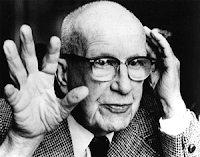
The difference that Fuller’s life made has yet to be fully understood or felt. He was a pioneer of ecological thinking and sustainability – balancing economic and environmental needs. His influence spreads as a growing number of people adopt the thinking that he helped to introduce. Although he never did complete his degree at Harvard, Fuller was awarded 44 honorary doctoral degrees, granted 25 US patents, and authored 28 books.
When Buckminster Fuller turned his life into an experiment (many called him Bucky, but he referred to himself as Guinea Pig B), he created the conditions for an extraordinary life. Perhaps best of all, his failures were feedback for an experiment, not a reflection of who he was, not something to take personally, not a reason to jump. Turning his life into an experiment gave him the best of both worlds: he ended his life even more accomplished than someone driven to achieve to prove something and remained more sanguine than someone who avoided risks altogether.

Perhaps Mohandas Gandhi, Martin Luther King, and Abraham Lincoln did something similar, made a similar sort of commitment. Gandhi pioneered and King popularized non-violent resistance. Letting racists cops or British soldiers do with you what they will is reckless. It's nearly suicidal. Lincoln angered both abolitionists and slave holders by trying to negotiate a compromise that would allow slavery to die out over decades rather than in a violent war.

Gandhi, King, and Lincoln may well have - like Fuller - decided that they had little to lose and an enormous amount to gain by giving themselves over to causes that were dangerous but could change the world. Where people who felt more careful of life may have shied away from such challenges, they seemed to embrace them. (King and Gandhi, who actually did attempt suicide rather than threaten it, seemed more inclined to embrace dangerous causes than Lincoln.)
Maybe one route to suicide prevention is to embrace the realization that fighting to protect a life is doomed to eventual failure whereas fighting to protect an ideal is not. Maybe there are worse things than feeling reckless about one's own life, if the risk taken is for some greater good.
One last note. King, Gandhi, and Lincoln were all assassinated. I wonder if this doesn't just confirm the degree to which they channeled their own suicidal feelings into a sort of courage that reflected a sort of reckless disregard for their own lives.

Yesterday was suicide prevention day. More American soldiers now die of suicide than in battle. Among teens, suicide is the third leading cause of death. It might be interesting to consider what could be done with the feelings of hopelessness and despair that provoke the reckless disregard for one's own life, not so much trying to numb them with positive thinking or drugs but instead channeling them into a different kind of life. Before talking about what that might mean, I'll tell one of my favorite stories, the story about how Buckminister Fuller convinced himself not to commit suicide.
In 1927, a 32 year-old man stood on the edge of Lake Michigan, ready to throw himself into the freezing waters. He was bankrupt, the result of his third business failure in a row. He’d been drinking heavily and was grief stricken over the death of his first child. He didn’t know how he would support his wife and newborn daughter. At that moment, his life seemed like a pattern of failures to him. Before the bankruptcies, years earlier, he’d been expelled from Harvard during his freshman year and never did complete his degree.
But fortunately, in this moment of drunken grief, Buckminster Fuller had the presence of mind to make an extraordinary decision. He realized that he was about to throw his life away and decided that if he was contemplating that, why not take half a step back and do something unorthodox. Rather than throw his life away, why not throw away his old notions of goals and achievement? He decided to turn his life into an experiment – an experiment to see how much difference one ordinary person could make. [1]
The difference that Fuller’s life made has yet to be fully understood or felt. He was a pioneer of ecological thinking and sustainability – balancing economic and environmental needs. His influence spreads as a growing number of people adopt the thinking that he helped to introduce. Although he never did complete his degree at Harvard, Fuller was awarded 44 honorary doctoral degrees, granted 25 US patents, and authored 28 books.
When Buckminster Fuller turned his life into an experiment (many called him Bucky, but he referred to himself as Guinea Pig B), he created the conditions for an extraordinary life. Perhaps best of all, his failures were feedback for an experiment, not a reflection of who he was, not something to take personally, not a reason to jump. Turning his life into an experiment gave him the best of both worlds: he ended his life even more accomplished than someone driven to achieve to prove something and remained more sanguine than someone who avoided risks altogether.

Perhaps Mohandas Gandhi, Martin Luther King, and Abraham Lincoln did something similar, made a similar sort of commitment. Gandhi pioneered and King popularized non-violent resistance. Letting racists cops or British soldiers do with you what they will is reckless. It's nearly suicidal. Lincoln angered both abolitionists and slave holders by trying to negotiate a compromise that would allow slavery to die out over decades rather than in a violent war.

Gandhi, King, and Lincoln may well have - like Fuller - decided that they had little to lose and an enormous amount to gain by giving themselves over to causes that were dangerous but could change the world. Where people who felt more careful of life may have shied away from such challenges, they seemed to embrace them. (King and Gandhi, who actually did attempt suicide rather than threaten it, seemed more inclined to embrace dangerous causes than Lincoln.)
Maybe one route to suicide prevention is to embrace the realization that fighting to protect a life is doomed to eventual failure whereas fighting to protect an ideal is not. Maybe there are worse things than feeling reckless about one's own life, if the risk taken is for some greater good.
One last note. King, Gandhi, and Lincoln were all assassinated. I wonder if this doesn't just confirm the degree to which they channeled their own suicidal feelings into a sort of courage that reflected a sort of reckless disregard for their own lives.
09 September 2013
Syria and the Shrinking Limits of National Sovereignty
The really interesting question about Syria is one of national sovereignty in the 21st century.
Imagine that you think family is the most important social institution. Imagine further that the family next door is in turmoil. Your neighbor - exercising his authority as head of the house - is beating his wife. The question is, do local authorities have any right to intercede?
That's not a hypothetical question. "Rule of thumb," came from a law that a man was not allowed to beat his wife with a rod any thicker than his thumb. That was the beginning of intervention in the sanctity of the family. The community finally decided that the right of the "man of the house" to rule as abusively as he wanted was not as important as the rights and safety of his wife and children. The state now intervenes. (And even that is complicated if the wife doesn't want to press charges.)
Now the man of the house whose authority is being questioned is the head of state.
After the Treaty of Westphalia in 1648, the prince was able to rule without interference. National sovereignty was the new authority, the nation-state becoming the ultimate authority to replace the church in that role. Whether the prince was a despot or benign (or even was deposed and replaced with a democracy), the rest of the world was to respect his right as the ruler. Nations were sovereign and were free to work out their own issues and decide for themselves how best to treat or abuse or even kill their citizens. Nations could put down revolts, practice genocide, let the homeless die on the street, refuse medical care to the unemployed, allow abortions, practice capital punishment, kill religious outlaws,or gas the citizens in neighborhoods that harbor rebels. Whatever the state chose to do, outside nations had no say. And of course as long as one respects national sovereignty, none of the above are crimes. Each nation determines its own laws, and therefore what is legal is whatever its rulers say is legal.
Two things have changed that. One, global media and the Internet mean that all stories are local. The deportation and killing of Jews was a distant rumor; today's attacks on citizens are rarely hidden from the world community. Second, the economy is now international. It's a global village, even if every head of house is - for now - free to beat his wife as he wants.
Globalization has given us more international laws. A country that wants to trade freely with other nations can't, for instance, simply subsidize an industry at the expense of companies in other countries. Slowly, national sovereignty has been increasingly challenged when it comes to economic policy. Some things - like trade and pollution - are obviously issues that spill across borders and can't be left to national sovereignty. The sewage that spills from San Diego drains into the ocean that breaks on the shores of Baja California.
The question is, at what point do international norms become more important than national sovereignty? At what point do you say that you don't care whether a man believes that he has the right to beat his wife or a ruler has the right to kill his people?
This is not a question of whether or not we approve of violence. The situation in Syria is already violent. The police aren't starting the violence but merely trying to end it, whether they're dragging off the husband or fighting against national forces. The question is not violence but authority.
In the last half of the 15th century, the Gutenberg Press made the Bible property of households, not just the church. At that point, the Vatican lost its monopoly as the authority in the West. In the first half of the 16th century, Protestants like Martin Luther finalized the challenge to the Vatican's authority, creating new churches. But this triggered about a century of religious wars as communities tried to work out who had the authority to enforce laws - particularly about what people could believe. It was not until the Treaty of Westphalia in 1648 that communities agreed on national authority as the new norm, officially displacing the Vatican or the new Protestant churches as the authorities who could decide such issues.
We are living through a similar change today, the nation in the same place as the church was in the 16th century.
National sovereignty has been consistently eroding for at least a half century. From multi-national corporations to international trade agreements, the WTO and World Bank, the UN, and the simple fact of the international media and world opinion, national sovereignty is being challenged from every side.
Syria is just one in a series of specific questions that stem from a larger, more general question: what are the limits of national sovereignty? And that raises an even more fascinating question. When the church lost its authority, it took a century or two to define who now had that. Now, if the nation-state has lost its place as the ultimate authority, how long will it take us to re-assign that authority? And what will take its place? Because if history is any guide, that can trigger a century of turmoil.
Imagine that you think family is the most important social institution. Imagine further that the family next door is in turmoil. Your neighbor - exercising his authority as head of the house - is beating his wife. The question is, do local authorities have any right to intercede?
That's not a hypothetical question. "Rule of thumb," came from a law that a man was not allowed to beat his wife with a rod any thicker than his thumb. That was the beginning of intervention in the sanctity of the family. The community finally decided that the right of the "man of the house" to rule as abusively as he wanted was not as important as the rights and safety of his wife and children. The state now intervenes. (And even that is complicated if the wife doesn't want to press charges.)
Now the man of the house whose authority is being questioned is the head of state.
After the Treaty of Westphalia in 1648, the prince was able to rule without interference. National sovereignty was the new authority, the nation-state becoming the ultimate authority to replace the church in that role. Whether the prince was a despot or benign (or even was deposed and replaced with a democracy), the rest of the world was to respect his right as the ruler. Nations were sovereign and were free to work out their own issues and decide for themselves how best to treat or abuse or even kill their citizens. Nations could put down revolts, practice genocide, let the homeless die on the street, refuse medical care to the unemployed, allow abortions, practice capital punishment, kill religious outlaws,or gas the citizens in neighborhoods that harbor rebels. Whatever the state chose to do, outside nations had no say. And of course as long as one respects national sovereignty, none of the above are crimes. Each nation determines its own laws, and therefore what is legal is whatever its rulers say is legal.
Two things have changed that. One, global media and the Internet mean that all stories are local. The deportation and killing of Jews was a distant rumor; today's attacks on citizens are rarely hidden from the world community. Second, the economy is now international. It's a global village, even if every head of house is - for now - free to beat his wife as he wants.
Globalization has given us more international laws. A country that wants to trade freely with other nations can't, for instance, simply subsidize an industry at the expense of companies in other countries. Slowly, national sovereignty has been increasingly challenged when it comes to economic policy. Some things - like trade and pollution - are obviously issues that spill across borders and can't be left to national sovereignty. The sewage that spills from San Diego drains into the ocean that breaks on the shores of Baja California.
The question is, at what point do international norms become more important than national sovereignty? At what point do you say that you don't care whether a man believes that he has the right to beat his wife or a ruler has the right to kill his people?
This is not a question of whether or not we approve of violence. The situation in Syria is already violent. The police aren't starting the violence but merely trying to end it, whether they're dragging off the husband or fighting against national forces. The question is not violence but authority.
In the last half of the 15th century, the Gutenberg Press made the Bible property of households, not just the church. At that point, the Vatican lost its monopoly as the authority in the West. In the first half of the 16th century, Protestants like Martin Luther finalized the challenge to the Vatican's authority, creating new churches. But this triggered about a century of religious wars as communities tried to work out who had the authority to enforce laws - particularly about what people could believe. It was not until the Treaty of Westphalia in 1648 that communities agreed on national authority as the new norm, officially displacing the Vatican or the new Protestant churches as the authorities who could decide such issues.
We are living through a similar change today, the nation in the same place as the church was in the 16th century.
National sovereignty has been consistently eroding for at least a half century. From multi-national corporations to international trade agreements, the WTO and World Bank, the UN, and the simple fact of the international media and world opinion, national sovereignty is being challenged from every side.
Syria is just one in a series of specific questions that stem from a larger, more general question: what are the limits of national sovereignty? And that raises an even more fascinating question. When the church lost its authority, it took a century or two to define who now had that. Now, if the nation-state has lost its place as the ultimate authority, how long will it take us to re-assign that authority? And what will take its place? Because if history is any guide, that can trigger a century of turmoil.
03 September 2013
OBIT: Ronald Coase, Nobel-Prize Winning Economist, May Have Predicted the Coming Transformation of the Corporation
Ronald Coase died Monday. He was 102 and had just published a book last year. Nice life.
Here is my mention of him in my book, The Fourth Economy. He explained the rise of the corporation as a function of high information costs. Now that information costs are so much lower, I suspect that the corporation will be transformed.

First, how Coase's theory explains why the corporation became so important.
Here is my mention of him in my book, The Fourth Economy. He explained the rise of the corporation as a function of high information costs. Now that information costs are so much lower, I suspect that the corporation will be transformed.

First, how Coase's theory explains why the corporation became so important.
As Alfred Chandler points out, the corporation grew in
response to the complication of work that came along with the evolution from
manufacturing work into knowledge work. Rather than the invisible hand of
markets coordinating this work, it was the visible hand of management that now
coordinated work.
Ronald Coase won a Nobel Prize in economics for explaining
why organizations rather than markets emerged as a means to organize work.
Simply put, his theory is that the information costs were too high to justify
one-on-one transactions, and it was more efficient to establish companies as a
means to organize work instead. Take the example of the guy who wants to buy a
burrito. Imagine that each time he wanted to get a burrito for lunch he had to
find the guy who made and sold tortillas, then the guy who made and sold beans,
and so on for carnitas, guacamole, salsa, and whatever other ingredients he
wanted. And then to top it all off, he had to hire someone to assemble all of
this into a burrito. Not only would this be a terribly complex task to perform
over the course of his lunch break, but the guy who would have to perform the
few minutes of burrito assembly would likely charge him for a full hour’s work,
since it would take him that long to get there and back—and this does not even
factor in the place and the tools (the capital) that would be needed to perform
all this. A burrito in this scenario might cost hundreds of dollars and take
hours to procure. It is much simpler for a customer to just go to the local
taco shop, where all the knowledge, the labor, and the capital are pooled into
one place, under one manager, and where our hungry hero can buy the burrito
for, say, $6 instead. The cost to find each person and item involved in making
the burrito is too high. And of course, the average person can actually assemble
a burrito (assuming that he doesn’t have to raise the chickens, grow the beans
and rice, etc.), something he can’t do with a really complex product like, say,
a number 2 pencil. By about 1900, many products had become too complex for any
one person to make. By early in the twenty-first century, many products had
become too complex for any one company to make, as outsourcing became
more and more common. Complexity makes
it challenging to coordinate production through one-off market exchanges, or
single transactions. It is easier to set up a company and then manage such
tasks and transactions (or as they are called within the corporation, process
steps). Coase’s thesis is that
information and transaction costs were higher than the cost of institutionalizing
these activities. So, instead of market transactions for each task or project,
organizations were formed to turn potentially sporadic transactions into
relatively stable processes.
In 1800, individual farmers or artisans conducted most
economic activity. By 2000, corporations conducted most economic activity.
Rather than being left to markets, work was managed. It was, as shown by
Coases’s analyses, too expensive to orchestrate all of this by market forces
alone.
Then, this excerpt from later in the book, arguing that if Coase is right, the corporation could be dissolved by lowered information costs.
It seems likely that the Internet will do for the
corporation what the Guttenberg press did for the church. That is, it’ll break
up structures we had always assumed were permanent: it’ll render temporal what
we thought was timeless.
Ronald Coase won a Nobel Prize in Economics for his work on
the firm. The question he asked is, “Why, if markets are so effective, do
companies have employees?” The simple answer is that information costs are too
high to turn every task into a transaction, making it cheaper to rely on
contracts than markets. That is, it is simply too hard to coordinate the work
that goes on inside of a company any way other than through job descriptions
and assignments. Yet Coase’s work was largely done long before the Internet as
we know it. Information costs have plummeted in the last couple of decades. One
consequence of these falling information costs may be a growth in the portion
of the economy that is managed by the invisible hand of markets rather than the
visible hand of management. Savvy corporations might tap this potential to
create a growth in market forces within corporations.
What does this mean in practical terms? If a programmer in
the Ukraine should get an idea and can find a designer in Italy and an
assistant in India, the work can be done through informal arrangements that may
or may not include a corporation. I actually think that one of the social
inventions of savvy communities will be the simplification of what is required
to form a multinational corporation, if only to make issues of ownership more
clear and simple. (It is one thing to say that people from different countries
collaborated to create something and quite another to say that everyone is
clear and happy about the way its success is shared.) Regardless of how many
and what type of social inventions will be necessary for this to work, however,
the fact is simply this: technology around the planet has never before so lent
itself to self-organizing activities. The Internet could replace organizational
structures. This alone could revolutionize the corporation.
What's Particularly Uncomfortable About Syria
Syria is a mess. Assad is killing rebels who - to be fair - are doing their best to kill Assad. And of course the killing is not limited to Syrians who have taken a side. If the US intervenes, it could kill even more people and then support the installation of a government that might be worse than Assad's. If the US does not intervene, it could be standing by while the immoral equivalent of the genocide in Rwanda or the Holocaust takes place. To further compound it, the world community could be facing more situations like this in more countries than it could ever hope to properly address. Anyone who says that it is obvious what should be done .. well, they have more confidence than me.
What is particularly distasteful about this mess from the standpoint of citizens and pundits, though, is that it forces Americans to think. Not just because of the conundrums above but because it defies the traditional divisions. Liberals typically oppose war and conservatives embrace it. In this case, Obama is for intervention and the GOP pundits are against it.
The only good thing about this tragedy is that it seems to be forcing Americans to think for themselves. And for many Americans, that is nearly as uncomfortable as the thought of complete strangers dying.
P.S. For me, the predecessor to a Syrian intervention is a statement of doctrine about when we do and don't get involved in these issues. What conditions would keep us out and which would draw us in? I don't like approaching this as a one-off. During the next couple of decades, I'm convinced that the Internet is going to topple dozens of bad regimes. Any policy we have should anticipate this.
What is particularly distasteful about this mess from the standpoint of citizens and pundits, though, is that it forces Americans to think. Not just because of the conundrums above but because it defies the traditional divisions. Liberals typically oppose war and conservatives embrace it. In this case, Obama is for intervention and the GOP pundits are against it.
The only good thing about this tragedy is that it seems to be forcing Americans to think for themselves. And for many Americans, that is nearly as uncomfortable as the thought of complete strangers dying.
P.S. For me, the predecessor to a Syrian intervention is a statement of doctrine about when we do and don't get involved in these issues. What conditions would keep us out and which would draw us in? I don't like approaching this as a one-off. During the next couple of decades, I'm convinced that the Internet is going to topple dozens of bad regimes. Any policy we have should anticipate this.
24 August 2013
When Teen Pregnancies are Rational
Listening to a program on evolutionary psychology, I heard this fascinating bit about how sexual education might not make much difference to the rate of teenage pregnancies in certain communities for at least two reasons.
 One, life expectancy - even in animals other than humans - is the simplest predictor of when a female will reproduce. If life expectancy in your neighborhood is 62, you are more likely to have a child in your late teens than early thirties, the opposite of what you might expect if life expectancy in your neighborhood is 92.
Two, if you are anticipating help from your mother in raising a child rather than your sexual partner, you had better hurry up and have the child while your mother is still young and able.
There is a difference between irrational behavior and behavior for which reasons are not quite as obvious. As it turns out, education doesn't overcome what people know.

Two, if you are anticipating help from your mother in raising a child rather than your sexual partner, you had better hurry up and have the child while your mother is still young and able.
There is a difference between irrational behavior and behavior for which reasons are not quite as obvious. As it turns out, education doesn't overcome what people know.
18 August 2013
Differences in American and British Humor
The brilliant, funny Stephen Fry contrasts the humor of the British and their rambunctious off-spring.
16 August 2013
Stress, Happiness & Shopping
Gallup tracks quite a few variables that define America in this 21st century. I've combined three of them below: the % of Americans who were happy or stressed and the dollars they spent.


Fortunately, spending is up.Consumption is the biggest driver of GDP, and as Americans spend more, GDP goes up and jobs are created and ... well then everyone is happier. Right?
Curiously, though, happiness and stress levels haven't seemed to move quite as much as spending levels. In fact, they seem to move to their own rhythm. Americans love shopping. It seems that shopping fails to return these affections. America's mood seems unrelated to the amount it spends.
------
Happiness / Stress is "The Gallup-Healthways Well-Being Index tracks daily the percentage of Americans who, reflecting on the day before they were surveyed, say they experienced a lot of happiness and enjoyment without a lot of stress and worry versus the percentage who say they experienced daily worry and stress without a lot of happiness and enjoyment."
Spending is "Gallup tracks daily the average dollar amount Americans report spending or charging on a daily basis, not counting the purchase of a home, motor vehicle, or normal household bills. Respondents are asked to reflect on the day prior to being surveyed and results are presented here in a 14-day rolling average"
08 August 2013
Many Hands Make Economies Prosper: Coordinating Smith's Invisible and Chandler's Visible Hands
For the US and most of the West, economic growth during the 20th century was unprecedented. Mind boggling. Per capita incomes rose by nearly 7X in the US in spite of a Great Depression, two world wars, and a period of double-digit inflation. Put another way, if people worked 6 days a week in 1900, they still wouldn't make as much as someone could make by 2000 in a single day. And of course in 1900, people were far more likely to work 6 days a week.
Growth in the West during the 20th century was previously unprecedented, but it has now been surpassed.
 Shanghai's rise in per capita income from $920 to $13,000 in just 22 years represents an increase of more than 14X. Double our rate of growth in one-fifth the time. Essentially a child born in 1990 could make more in a month than his parents could at the same age in a year.
There are so many things that various folks could conclude from these facts. For me, it's an affirmation of at least two things: a move towards what we rather imprecisely call capitalism can be a boon to an economy that has previously rejected markets and, central planning and policy can - within the framework of a market economy - make a positive difference.
As companies, products, and economies became more complex, Adam Smith's invisible hand of the market was gradually supplemented by Alfred Chandler's visible hand of management. From Singapore to China, various Asian economies have seemed to understand this better than the West, where modern management first emerged. Planning has a role.
In my opinion, national economies could use more visible hand and corporations could use more invisible hand. Management -the kind that every corporation uses - is a wonderful positive, coordinating the efforts of groups who could not - on their own - succeed at projects that require the inputs of so many different groups and functions. Additionally, self-organizing complexity as we see in a market economy also creates predictably unpredictable outcomes, innovation, and wealth creation.
Dee Hock - the only CEO in history to create an organization (VISA) that exceeded $1 trillion in annual transactions - argues that we've entered a chaordic age in which all good things happen at the boundary of chaos and order. Go for the order of management - of Chandler's visible hand - only and you get something like China in the mid-twentieth century: stagnant, repressive, and oppressive. But go for free-market only - a rules free zone of pure capitalism - and you get robber barons, gross income inequality, and a litany of oppressive by neglect sort of stories. It seems to be at the boundary of markets and planning - in Hock's chaordic region - that phenomenal things happen.
And maybe the real story is one of autonomy supportive policies. Edward Deci wrote Why We Do What We Do in the late 1990s - about the time Shanghai was taking off. Aimed at managers, parents, and teachers, his framework could be valuable for policy makers as well. He argued that there are three models (of parenting, management, and teaching): controlling, abandonment, and autonomy-supportive. Controlling parents do little to create self-sufficiency in their children, dictating actions rather than provoking thought. Abandonment just lets people work through their own learning, find their own way. Finally, autonomy supportive works with the individual to coach them toward the place where they can make their own choices, choices for which they've been prepared by teaching, practice, and sufficient resources. The locus of control is with the student or employee or child, but only after they've been properly prepared to make choices. It is not about dictating what the authority figure wants but instead about enabling someone else to make their own choices with some authority.
Deci's model of autonomy-support could be made to work, it seems to me, not just by managers within corporations but by policy makers within local, state, or federal governments. Asia learned from the West, adopting so much of our market innovations. Given their success, perhaps it's time we learned from them as well. For us, that learning would take the form of two prongs. Our corporations could - like China in the late-twentieth century - open up to allow individuals within them to pursue their own goals, giving up on the controlling model. And our governments could do more to create support for individuals, not just through education but even through planning efforts, trying to create something chaordic.
Growth in the West during the 20th century was previously unprecedented, but it has now been surpassed.

There are so many things that various folks could conclude from these facts. For me, it's an affirmation of at least two things: a move towards what we rather imprecisely call capitalism can be a boon to an economy that has previously rejected markets and, central planning and policy can - within the framework of a market economy - make a positive difference.
As companies, products, and economies became more complex, Adam Smith's invisible hand of the market was gradually supplemented by Alfred Chandler's visible hand of management. From Singapore to China, various Asian economies have seemed to understand this better than the West, where modern management first emerged. Planning has a role.
In my opinion, national economies could use more visible hand and corporations could use more invisible hand. Management -the kind that every corporation uses - is a wonderful positive, coordinating the efforts of groups who could not - on their own - succeed at projects that require the inputs of so many different groups and functions. Additionally, self-organizing complexity as we see in a market economy also creates predictably unpredictable outcomes, innovation, and wealth creation.
Dee Hock - the only CEO in history to create an organization (VISA) that exceeded $1 trillion in annual transactions - argues that we've entered a chaordic age in which all good things happen at the boundary of chaos and order. Go for the order of management - of Chandler's visible hand - only and you get something like China in the mid-twentieth century: stagnant, repressive, and oppressive. But go for free-market only - a rules free zone of pure capitalism - and you get robber barons, gross income inequality, and a litany of oppressive by neglect sort of stories. It seems to be at the boundary of markets and planning - in Hock's chaordic region - that phenomenal things happen.
And maybe the real story is one of autonomy supportive policies. Edward Deci wrote Why We Do What We Do in the late 1990s - about the time Shanghai was taking off. Aimed at managers, parents, and teachers, his framework could be valuable for policy makers as well. He argued that there are three models (of parenting, management, and teaching): controlling, abandonment, and autonomy-supportive. Controlling parents do little to create self-sufficiency in their children, dictating actions rather than provoking thought. Abandonment just lets people work through their own learning, find their own way. Finally, autonomy supportive works with the individual to coach them toward the place where they can make their own choices, choices for which they've been prepared by teaching, practice, and sufficient resources. The locus of control is with the student or employee or child, but only after they've been properly prepared to make choices. It is not about dictating what the authority figure wants but instead about enabling someone else to make their own choices with some authority.
Deci's model of autonomy-support could be made to work, it seems to me, not just by managers within corporations but by policy makers within local, state, or federal governments. Asia learned from the West, adopting so much of our market innovations. Given their success, perhaps it's time we learned from them as well. For us, that learning would take the form of two prongs. Our corporations could - like China in the late-twentieth century - open up to allow individuals within them to pursue their own goals, giving up on the controlling model. And our governments could do more to create support for individuals, not just through education but even through planning efforts, trying to create something chaordic.
02 August 2013
Everything is Made Up
Everything is made up. Tyrannies and polygamies and capitalism
and K-12 education. It’s all made up but of course we quickly forget that and
come to believe that "this" (whatever "this" we are living in) is just the way things are.
The problem is, societies and economies develop. They
outgrow the solutions the previous generation just made up. Of course when that
happens, they may not see, say, democracy that allows only property-owning men
to vote as only made up. Instead, they see it as the way things are. The way
"we" are, the way we define ourselves. And of course when that happens, change becomes a threat to self and gets resisted. Sometimes violently.
Everything is made up but we forget that. And that’s just
one of the reasons that social change is hard.
Everything is made up but you can’t just make up
consequences. Some things that you make up – like a tricycle – are less
impressive than other things you make up – like a passenger jet. There are huge
differences that follow from just making up a tyranny or just making up a
democracy.
Also, some changes can be neatly fit into the existing
order while others overturn it. Some are "normal" and some are revolutionary.
An Industrial Economy suited to overcoming the limit of capital
is very different from an Information Economy suited to overcoming the limit of
knowledge work. And the transformation from an Industrial to Information
Economy is a big shift. It’s upsetting. And in the end, it reveals that the
institutions through which we once defined ourselves are in fact just tools
that can be changed. Monarchies can become democracies. Credit carefully guarded by bankers can be given out on plastic cards. But the insight that the institution through which we once defined ourselves is really just a tool is not an insight that is obvious or immediate or
even particularly comforting.
You are living through an historic economic change. You may
not know that. It’s not obvious that people living during the Dark Ages ever
knew they were living in the Dark Ages or even called it that. The Industrial
Revolution had been underway for at least decades – arguably a century – before
the term “Industrial Revolution” was even used, and even then only by an elite
few. It is possible that you’re the first of your friends to hear that we’ve already
entered a new economy but eventually all of your friends will know – or perhaps
all of their children will know.
And one other thing that everyone’s children and grandchildren
will know is that everything is made up. And they will regularly make things up
to better realize potential, possibility, and to shape history in the process
of exploring what it means to be human. They will not, for instance, accept an institution that grades them on their learning; instead, they'll expect an institution to change to adapt to their learning styles and goals and personal strengths and weaknesses rather than accepting them to change to adapt to what is - allow me to repeat - just a tool for individuals.
Making things up in the domain of social invention will become as normal and as expected as our expectation that companies will make up new model products. And this matter of making things up will not just be referred
to technological change. It will increasingly include social invention, creating
new ways of learning, new kinds of religion, and regular – and occasionally
disruptive – social inventions in the domain of politics, finance, and, of
course, business, Just like machinery during the Industrial Economy or information during the Information Economy, social inventions will proliferate as entrepreneurship is popularized. Entrepreneurship, like R&D last century, will become
institutionalized. Or would be, if it were possible to institutionalize the very
process of regularly transforming institutions.
Everything is made up. Even my claim that there have been
three past economies – an Agricultural, an Industrial, and an Information
Economy – and that we are living into a Fourth, Entrepreneurial Economy. That
is made up but the consequences of focusing on popularizing entrepreneurship are
very different from the consequences of popularizing knowledge work. Very
different, very challenging but potentially very powerful. Powerful enough to create a new economy.
30 July 2013
A Big, Bold Proposal for Capital Market Reform - a startup tax on capital markets

The big question is not whether there is cheating and insider trading. That's the little question. The big question is whether capital markets are set up to best create long-term wealth, whether capital still drives economic growth. For all the talk of capitalism, that's no longer so clear.
Oddly, the movement of equity markets seems to have little to do with the movement of GDP. One might imagine that as equity prices are bid up, there is more incentive to create equity, to start businesses, and that GDP growth would follow a rise in the stock market. As it is, though, rallies that seemingly rest on the assumption that the economy is about to take off merely bust. The stock market goes up faster than average but the economy does not follow, as you can see in this graph from Market Watch.

If capital markets did a better job of creating equity rather than just pricing it, you might GDP go up in response to a rise in market capitalization. But this doesn't happen. As you can see in this graph on the right, GDP grows at a fairly steady pace while the market leaps about it like a hyper kid. As we were reminded by the Financial Crash of the late aughts, equity markets rising can actually trigger the reverse, as burst bubbles actually create a recession.
To me, this points to a failure of entrepreneurship. Capital markets are plenty powerful to provide trillions in debt or equity financing. This chart suggests that capital is more often used to price (often incorrectly) equities than create them. All that money chases value; little of it creates values. I would argue that this is because entrepreneurship is the limit in today's economy, not capital. There is more money available to invest than there are plausible ventures in which to invest.
It would be interesting to have some sort of equity tax, requiring investors to set aside a percentage of their investments to finance public and private sector startups, forcing more money directly into entrepreneurial ventures. This might raise the probability that as investments go up, a percentage is actually creating the next GM, IBM, or Microsoft rather than just changing the price of the old GM, IBM, or Microsoft. The problem of failing to create wealth or jobs does not point to a shortage of capital. Rather, it points to a shortage of entrepreneurship. Any policy that would do more to stimulate entrepreneurship would make capital markets more effective. After all, if capital markets aren't creating wealth, it hardly makes a difference to the economy whether or not some people are unfairly getting information in advance of the market; to move early on a market that's only keeping pace with GDP growth rather than driving it confers little advantage.
If markets were forced to funnel more capital into startups, this could easily create a bubble there. If entrepreneurship really is the limit, it suggests that much of the capital invested in creating a new generation of entrepreneurs would - short turn - be wasted. But a wave of investment financing that had to go into startups would do at least two things. One, it would entice existing corporations to structure to make themselves more entrepreneurial, spinning off ventures that could become stand alone entities. Two, it would create a generation of entrepreneurs who might have otherwise stayed in middle management, an initiative akin to the GI Bill that turned thousands - perhaps millions - of returning WWII veterans who would have otherwise worked in shops or on farms into college students who became doctors, lawyers, professors, engineers, and scientists. People who would not have otherwise become white-collar professionals did, and incomes rose.
It is time to take seriously the fact that in the West, capital markets are no longer creating wealth and jobs at the rate they once did. The limit to progress has shifted and until policy changes to reflect that, capital markets are as likely to create bubbles as jobs or a general rise in income. Studies suggest that about 100% of the rise in income coming out of the recession went to the top 1%. The problem is not that the rich are getting richer. The problem is that no one else is.
Bernanke has done a fairly heroic job of stimulating the economy without any assistance from Congress, but his monetary policy seems to inadequately funnel money into the markets for startups where it can actually create jobs. In the last year, banks reserve balance requirements - the amount they are required to hold idle to offset loans and investments - rose by nearly $13 billion, from $51B to $63B. The amount they actually held in reserve, however, was wildly in excess of that: in the last year it has risen by about $500 billion, from $1.5 trillion to $2 trillion. As it now stands, money pushed into the system can - and does - sit idle. A startup fund could change that.
Capital markets could create widespread wealth and jobs far more effectively. Going after cheaters won't change that. Establishing up a startup tax could.
"Hello! I'm running for mayor because my wife likes me."
We can only hope that when voters replace San Diego mayor Bob Filner they don't do what they did after Clinton and elect someone whose only apparent qualification is that he's faithful to his wife.
Subscribe to:
Posts (Atom)